

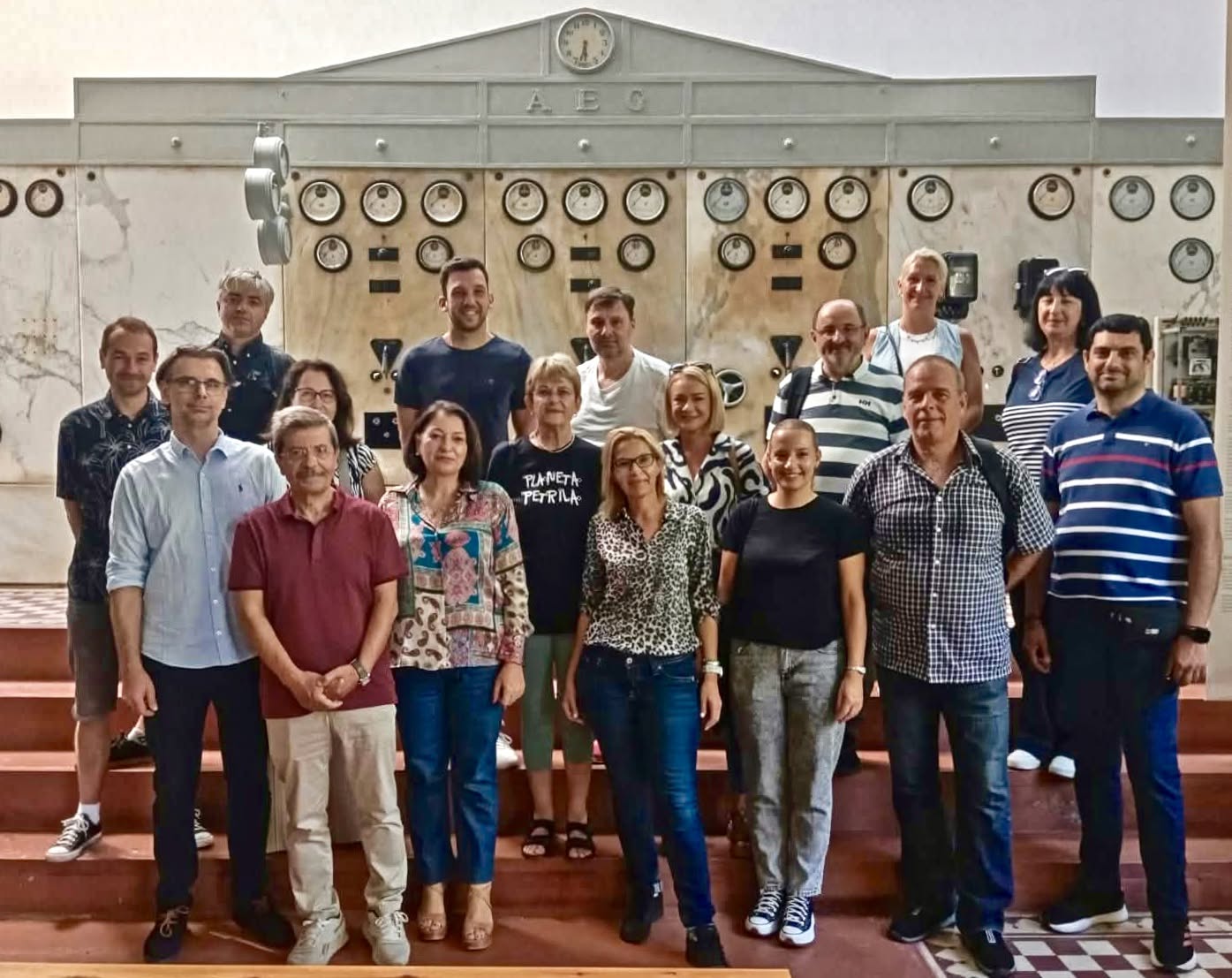
We were pleased to welcome the HYDROMINE project research team and Professor Michalis Galetakis from the School of Mineral Resources Engineering at the Technical University of Crete to the Agia Small Hydroelectric Power Plant.
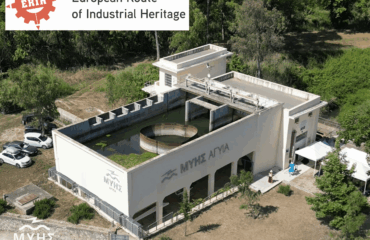
In 1929, a pioneering project in Chania harnessed water power to generate electricity and help electrify the city. This was the Agia Small Hydroelectric Power Plant, inaugurated by Eleftherios Venizelos on July 22, 1929.
Its innovation went beyond mere electricity generation; it lay in using an available natural resource and the area’s unique geography to meet a fundamental need of the time: access to electricity. The lake, the water, the elevation difference, and the technology combined to create a project that played a decisive role in the modernization of Chania.
Almost a century later, this same philosophy is resurfacing through a new research approach. The Technical University of Crete is participating in the European research project HYDROMINE—which was presented in Chania—investigating the potential to utilize abandoned quarries and mines as energy storage facilities. The concept is simple in principle yet particularly interesting in its application: when there is a surplus of electricity—for instance, from photovoltaic panels or wind turbines—it is used to pump water into a higher-elevation reservoir. When electricity demand rises, the water flows back down to a lower level, driving a turbine to generate electricity once more. This is known as pumped-storage hydropower, a form of energy storage that can help make more effective use of renewable energy sources.
The unique innovation of HYDROMINE lies in the effort to utilize existing mining sites and develop affordable, small- to medium-scale solutions. The project explores whether sites that have completed their initial production cycle can be repurposed for energy generation.
Two different eras, two different technological applications, yet a shared philosophy: innovation arises when we harness a location’s natural resources and potential with knowledge and creativity.
In 1929, the challenge was to generate electricity and make it available to society. Today, the challenge also includes the ability to store it, ensuring that energy produced from the sun and wind is available when we truly need it. This connection highlights the enduring value of the Agia Hydroelectric Power Plant in a unique way.
Its recent inclusion in the European Route of Industrial Heritage (ERIH)—an initiative led by the Regional Development Company of Crete—opens up new possibilities for showcasing the site not merely as a historical monument, but also as a venue for education, scientific dialogue, and engagement with modern energy technologies.
A collaboration with the Technical University of Crete could serve as a starting point for educational initiatives linking the history of hydroelectric power with modern storage technologies, offering students and visitors the chance to understand scientific evolution and how ideas from the past take on new significance in the present.
Industrial heritage does more than show us where we started; it can also help us understand where we are heading. The Agia Hydroelectric Power Station is ideally positioned to serve as just such a bridge between history, science, and the future.
We extend our sincere thanks to Prof. Michalis Galetakis of the School of Mineral Resources Engineering for the visit by the HYDROMINE project research team to the Agia Hydroelectric Power Station!