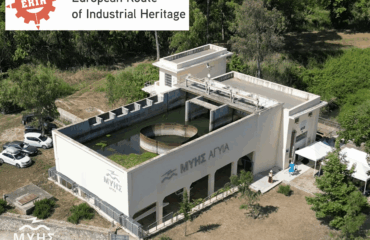


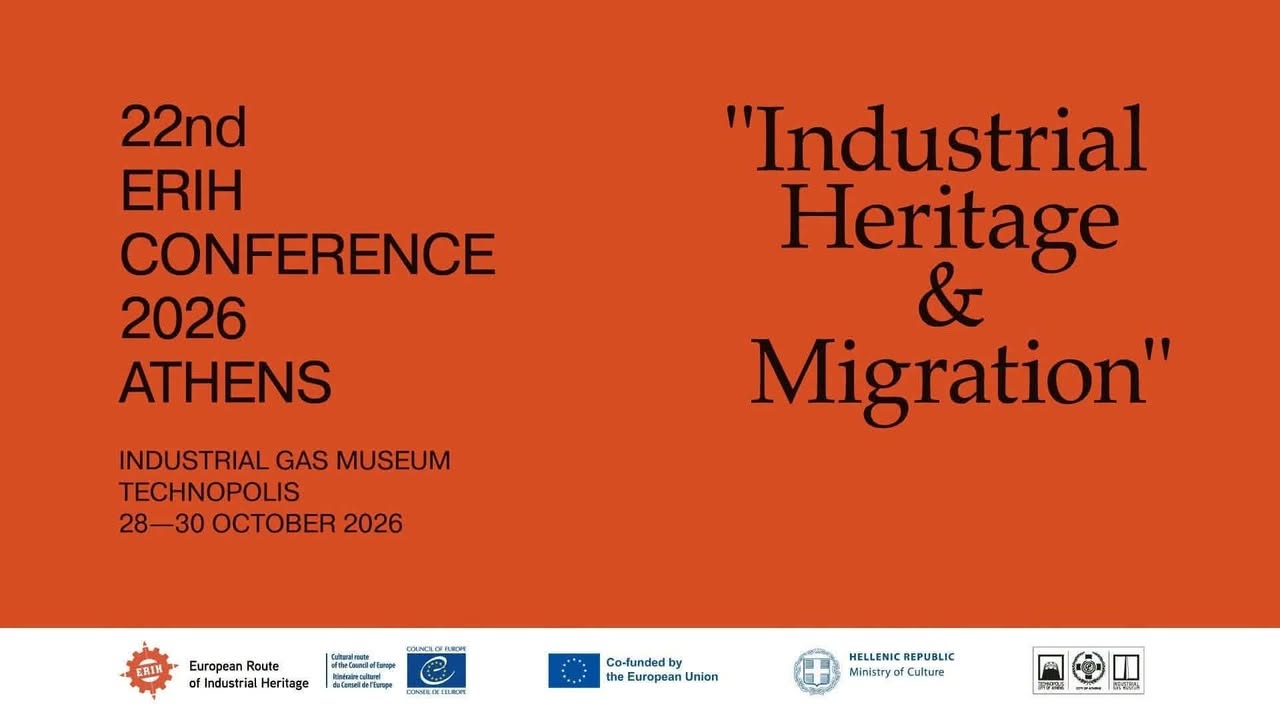
The Hydroelectric Power Plant (SHPP Agia), an official member of the European Route of Industrial Heritage (ERIH), participated for the first time in the 22nd ERIH Annual Conference, held in Greece from October 28 to 30, 2026. The conference, dedicated to the theme “Industrial Heritage & Migration,” took place at the Industrial Gas Museum within the Technopolis complex of the City of Athens.
The Agia Hydroelectric Power Station was represented by Ms. Maria Petrantonaki, Director of the Regional Development Company of Crete S.A., which manages the site under a programmatic agreement with the Region of Crete and the Technical Chamber of Greece – Western Crete Department.
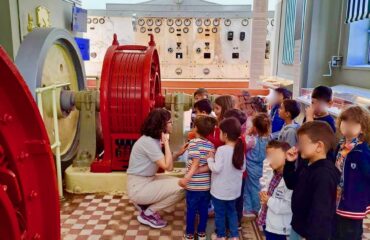
During the conference, Ms. Petrantonaki presented the Small Hydroelectric Power Plant (SHPP Agia) to the European delegates, highlighting the Region of Crete’s instrumental role in supporting this challenging initiative. Her presentation emphasized the site’s architectural and industrial uniqueness, its rich industrial history, its scientific collaborations, and its distinctive ecological setting within a Natura 2000 protected area. She also showcased its specialized educational programs and initiatives, which generate benefits at both local and international levels, as well as its considerable potential for future development, collaboration, and networking.
Alongside SHPP Agia, the Museum of Typography of Yannis and Eleni Garedakis also represented Crete at the ERIH International Conference. Notably, the Museum is scheduled to host the ERIH National Meeting in 2027.
The 22nd ERIH International Conference was an outstanding success, distinguished by its high standard of organization and content. Its engaging presentations, thoughtfully designed workshops, and exploration of contemporary issues attracted experts and professionals from across Europe, representing the fields of culture, research, and museology.
As part of the conference programme, participants visited the Mineralogical Museum of Lavrio (MML), where they explored the mining and metallurgical heritage of the Lavreotiki region. The visit continued at the Lavrio Technological and Cultural Park, an iconic landmark in Greece’s industrial history, where the area’s industrial legacy meets contemporary research, technology, innovation, and culture.
The programme also included visits to the Railway Museum of Athens, the Old Steam-Electric Power Station of Piraeus, and the historic textile factory now housed at the School of Fine Arts.
The conference provided a valuable platform for exchanging knowledge, strengthening international partnerships, and showcasing Greece’s rich industrial heritage. For MYHS Agia, participation further reinforced its presence within the European industrial heritage network and highlighted its potential as a site where industrial history, environmental value, scientific research, and education converge.